State of the SC Nonprofit Sector
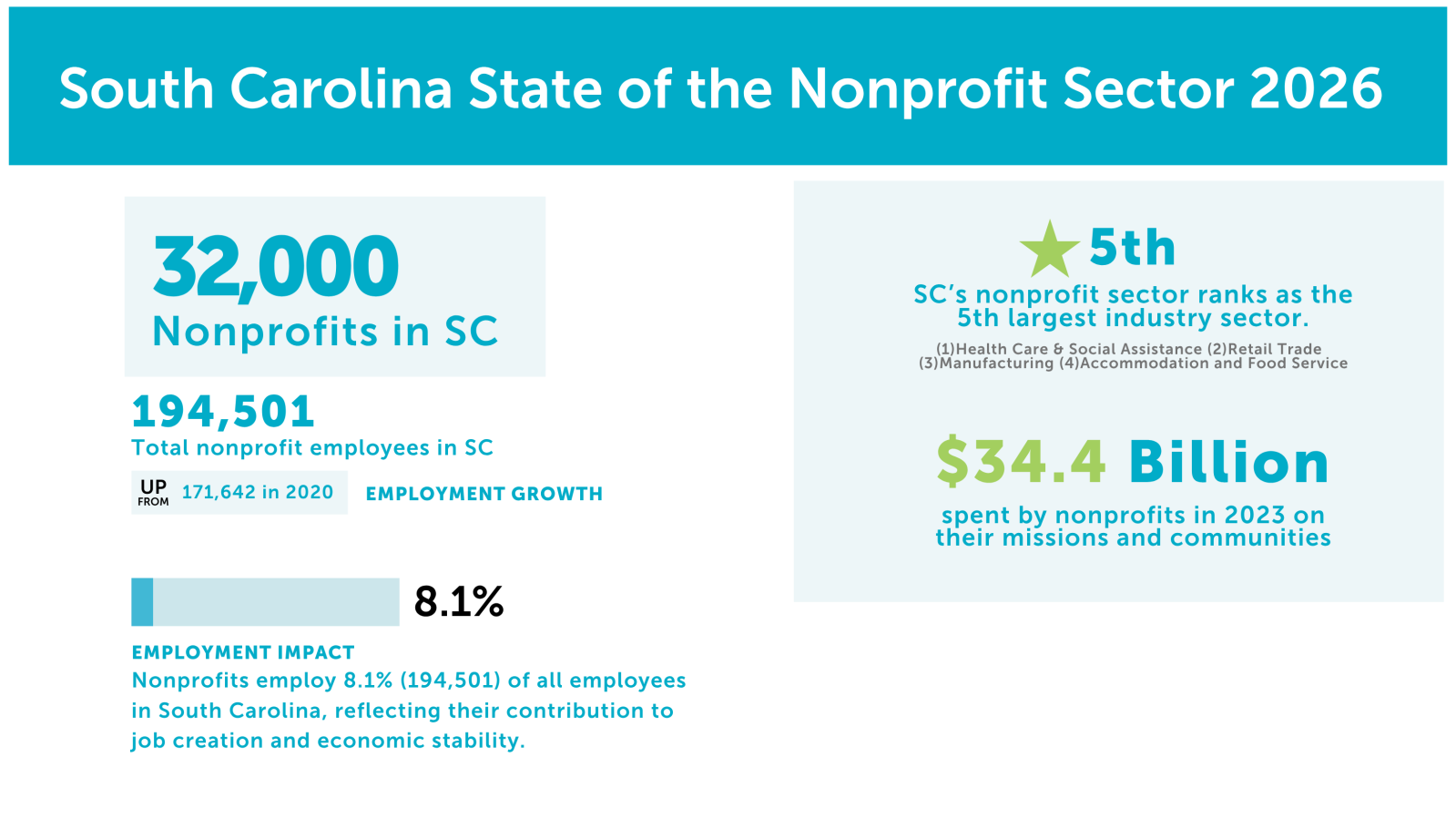
The impact of nonprofit 501(c)3 organizations on South Carolina's workforce is undeniable, as revealed by USC Upstate College of Business and Economics and Sam Cooper, PhD a comprehensive analysis of publicly available data, including IRS 990 forms, U.S. Census Bureau, Bureau of Labor Statistics, and other relevant sources.
Executive Summary

Scale and Workforce:
• Health-related nonprofits employ about 80,200 workers, roughly 41% of full-990 employment.
• Mean nonprofit wages exceed Retail Trade and Accommodation & Food Services averages.
• The sector supports employment, wages and regional economic activity across SC.
Pressure Points
• Federal funding uncertainty, contribution moderation and inflation are creating simultaneous pressure.
• Workforce shortages, burnout, compensation constraints and succession remain major concerns.
• More than 40% of SC nonprofits do not pay their lowest-paid employee enough to meet a basic living-wage standard.
Community Need:
• 42% of SC households fell below the ALICE Threshold in 2023.
• Basic household costs rose 63% from 2016 to 2024, more than double CPI growth.
• Food insecurity remains above the national average, with several rural counties above 20%.
Capacity Gap:
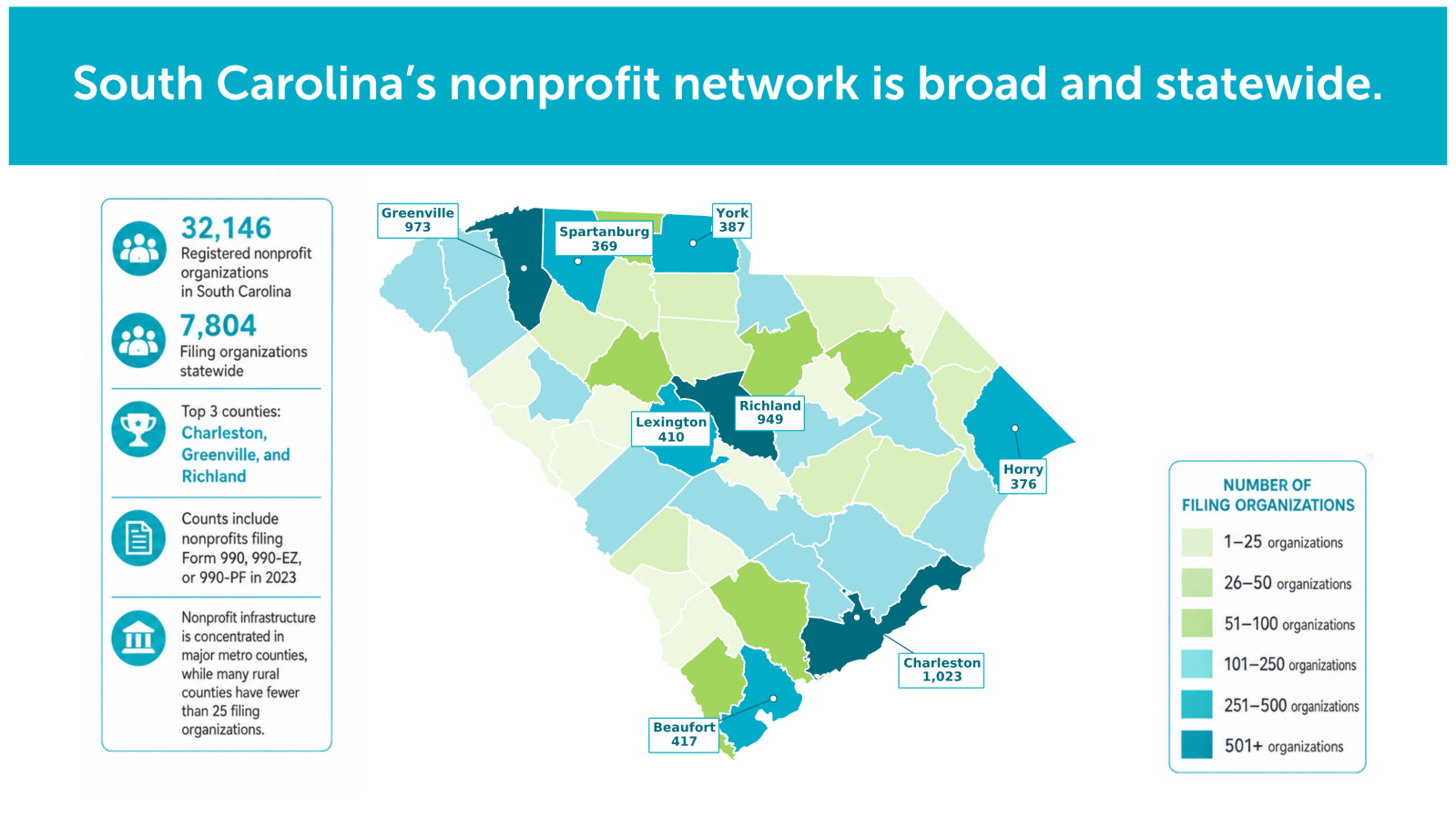
• Seven largest counties hold 49.3% of the population but 70.8% of nonprofit employment.
• Remaining 39 counties hold 50.7% of population but only 29.2% of nonprofit employment.
• Rural infrastructure and capacity-building remain key priorities.